
In motorsport, speed is the most visible outcome. Less visible, but far more decisive, is the system that makes speed possible.
Over the past two decades, Mintimes Group has been building precisely such a system in China — one that extends well beyond race days and into infrastructure, talent development, and commercial integration. What began in 2004 as circuit operations has gradually evolved into something more expansive: an attempt to construct a sustainable motorsport ecosystem.
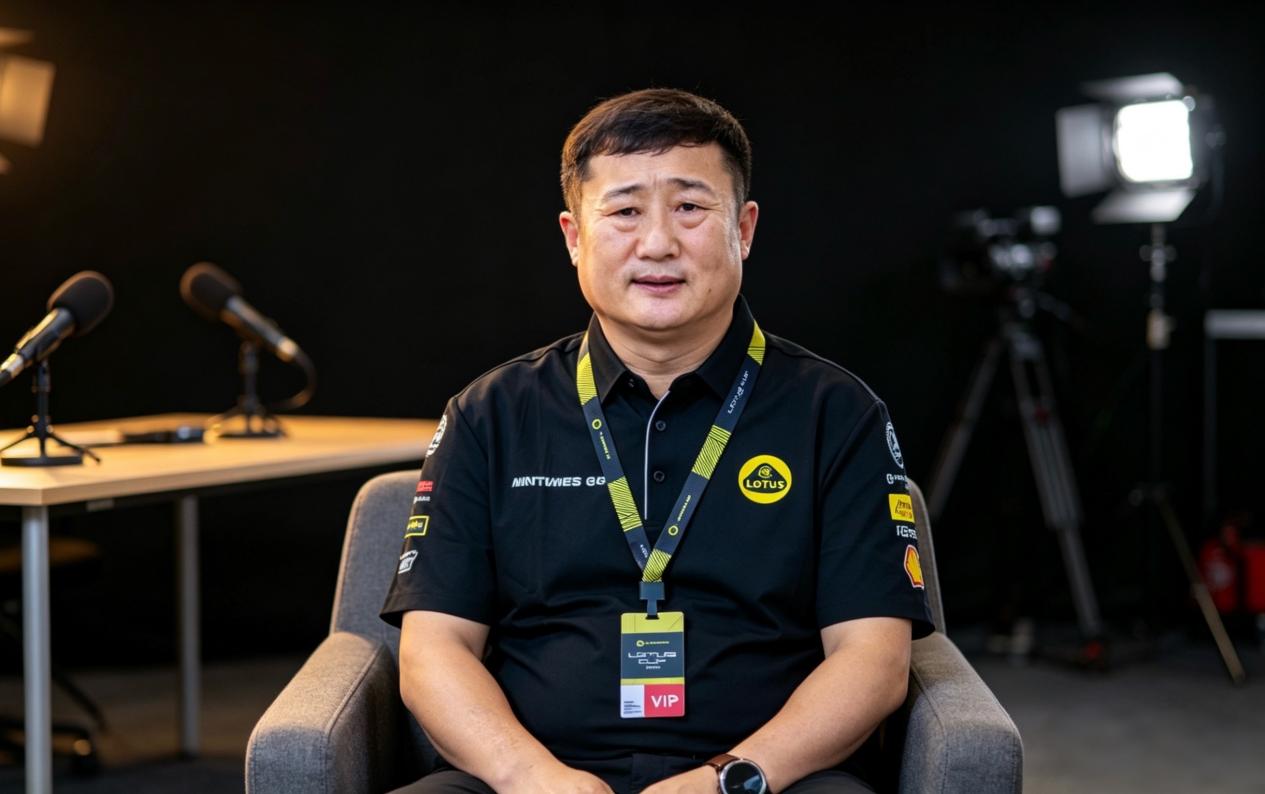
Mintimes Group Vice President Chen Jie Photo: Courtesy of Mintimes Group
According to Vice President Chen Jie, the company’s recent push into Southeast Asia is not a sudden strategic pivot, but a continuation of a long-established trajectory. “You don’t globalise without first understanding how to operate at home,” he noted in a recent conversation.
That domestic foundation is anchored by three circuits — Ningbo, Chengdu, and Wuhan — each representing a different layer of the company’s approach. Ningbo functions as a commercially viable benchmark, where events, brand activities and daily operations are calibrated to maximise utilisation. Chengdu pushes the model further, embedding the circuit within a broader commercial and lifestyle complex. Wuhan, meanwhile, reflects a different direction, linking motorsport with vehicle testing and the future of mobility.
Taken together, these projects illustrate how circuits are no longer treated as standalone venues, but as nodes within a larger economic and cultural network.
Yet infrastructure alone does not sustain a sport. Mintimes’ parallel effort has been to construct a vertically integrated event system — one that connects grassroots participation with elite competition. At the top sits the FIA F4 Chinese Championship, widely recognised as a stepping stone toward Formula racing at the global level. At the base, a range of entry-level competitions lowers the threshold for participation, gradually expanding the talent pool and audience base.
This dual structure reflects a broader shift in how motorsport is positioned. Rather than remaining a niche pursuit, it is being reimagined as a more accessible form of engagement, capable of supporting both professional pathways and mass involvement.
It is only against this backdrop that Mintimes’ move into Southeast Asia begins to make sense. The overseas debut of the Lotus Cup in Malaysia marked a notable moment — not because it was the first time a race crossed borders, but because of what accompanied it. Operational standards, event formats and organisational experience were all part of the export.
For Chen, this signals a subtle but important transition. Chinese motorsport, long shaped by imported events and international frameworks, is beginning to test its own ability to operate externally. Southeast Asia, with its growing interest in motorsport and its geographic proximity, provides a practical starting point.
Still, there is little sense of urgency in how the company frames its ambitions. Motorsport, Chen suggested, is closer to a marathon than a sprint — an industry where continuity matters more than speed of expansion.
After 20 years, Mintimes has moved through three distinct phases: building infrastructure, establishing an ecosystem, and stepping onto the international stage. None of these, however, are presented as endpoints. If anything, they serve as prerequisites for what comes next.
As motorsport continues to evolve across Asia, the question is no longer whether regional players can participate globally, but how they will define their role within that landscape. For Mintimes, the answer appears to lie not in isolated events, but in the gradual export of a system — one built patiently, and intended to travel.
By Daniel Tan


Singapore Technology Information: Your Source for Tech, AI, Aerospace, Biotech News
© Singapore Technology Information Privacy Policy Contact us