
Scientists now believe life may be found on the notoriously inhospitable planet of Venus – but they believe it will have come from much closer to home.
It has long been debated whether life can travel between planets,carried through space on asteroids,comets and other celestial objects.
The theory,known as Panspermia,proposes that when the building blocks of life emerge on one world,powerful impacts can eject surface material into space,where it can seed life on other planets.
A new study presented at the 2026 Lunar and Planetary Science Conference (LPSC) has explored the possibility this could have occurred with terrestrial microbes that have been transported to Venus.
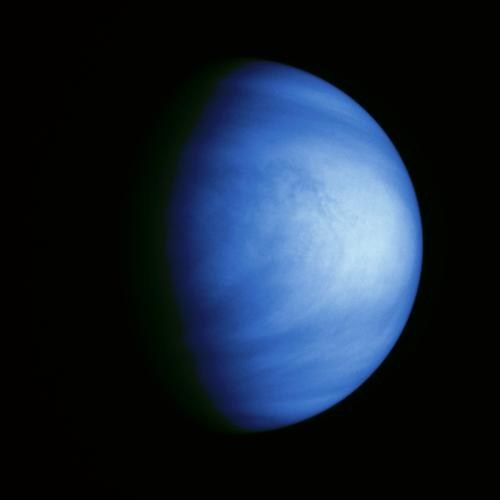
Could there be life on the famously inhospitable Venus? (Picture: Nasa/JPL/Cover Images)
Researchers from The Johns Hopkins University Applied Physics Laboratory (JHUAPL) and Sandia National Laboratories used the “Venus Life Equation” (VLE),a framework developed by Noam Izenberg and colleagues in 2021,to assess the likelihood of life existing in Venus’s atmosphere.
Their modelling suggests that life could potentially survive within Venus’s clouds for at least a few days per century,aided by material originating from Earth.
The VLE breaks down the probability of life into a series of factors. When multiplied together,these factors provide an estimate of the likelihood that life exists.
The researchers first examined whether organic material could survive the journey through space. Previous computer simulations and analyses of meteorites found on Earth have shown that organic material can survive the trip through interplanetary space.
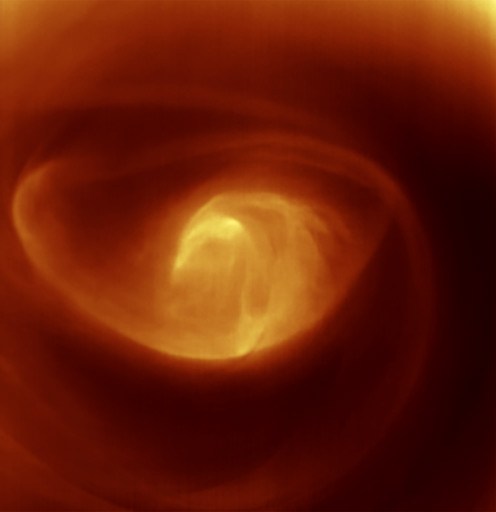
The new study has explored the possibility of terrestrial microbes being transported to Venus (Picture: ESA/VIRTIS/INAF-IASF/Obs. de Paris-LESIA/Univ. Oxford/Cover Images)
Surviving once on Venus,however,is a tougher ask,but they noted that some layers within Venus’s cloud deck exhibit surprisingly moderate temperatures and pressures.
As a result,several studies have suggested that microbial life could potentially survive in these regions.
To investigate whether this could occur,the team focused on how fireball meteorites behave when entering Venus’s atmosphere.
Their calculations considered factors including atmospheric explosion and fragmentation into smaller pieces capable of remaining suspended within the clouds.
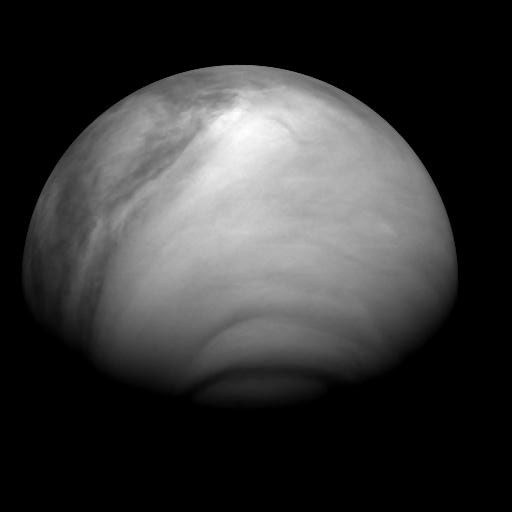
Venus’ atmosphere seen from the European Space Agency’s Venus Express Mission (Picture: ESA/ MPS/DLR/IDA/Cover Images)
The team then estimated the number of bolides capable of transporting material from Earth or Mars into Venus’s cloud layers.
Their findings suggest that hundreds of billions of cells may have been transferred from Earth to Venus over time,with a similarly large number potentially remaining viable.
The model’s best estimate indicated that around 100 cells are dispersed into Venus’s clouds each year,and approximately 20 billion cells could have been transferred from Earth over the past one billion years.
So,if future astrobiology missions were to discover life on Venus,there’s a strong chance we are not meeting a new alien species – but our long-lost microbe cousins from Earth.


Singapore Technology Information: Your Source for Tech, AI, Aerospace, Biotech News
© Singapore Technology Information Privacy Policy Contact us